Maritime & shipping

Maritime Briefs

For years we have published maritime and shipping commentary for operators, financiers, and counsel in Nigeria. Use this desk to read up; when you need advice on your own matter, contact the firm or book a consultation.

Maritime Briefs

Thought leadership from practice. Pieces here reflect our maritime and shipping work in Nigeria. They are for reading and context—not a substitute for advice on your situation.

Follow Maritime Briefs on LinkedIn for ongoing commentary.

Need counsel? Book a consultation · Contact · WhatsApp

Maritime Brief

Brief

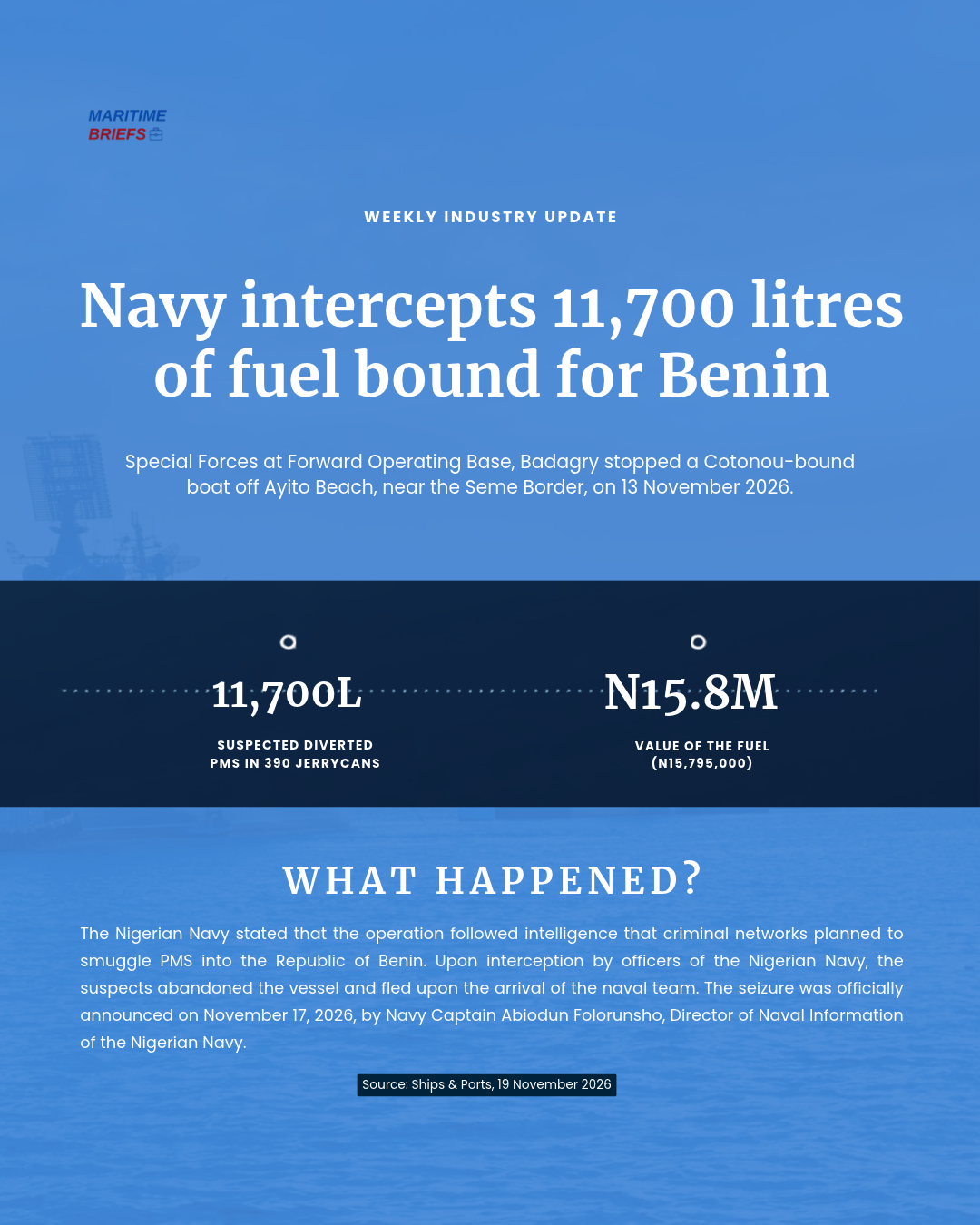
MB Weekly Update - Nigerian Navy Intercepts 11,700 Litres of Fuel Bound for Benin

This Week in Nigeria’s Maritime and Oil & Gas Sector The Nigerian Navy special forces at Forward Operating Base (FOB) Badagry have intercepted suspected illegally diverted Premium Motor Spirit (PMS) headed for the Republic of Benin. On 13 November, naval officers stopped a Cotonou-bound boat off Ayito Beach, near the Seme Border in Lagos State. It carried 11,700 litres of fuel in 390 jerrycans, valued at ₦15,795,000. Upon interception by naval officers, the suspects abandoned the boat and fled, and no arrests were reported. The Navy stated the operation followed intelligence that criminal networks planned to smuggle the fuel into Benin. For more information, visit lexvertex-legal.com.

Energy & natural resourcesMaritime & shippingRegulatory

Open brief
Maritime Briefs Lex Vertex

Brief

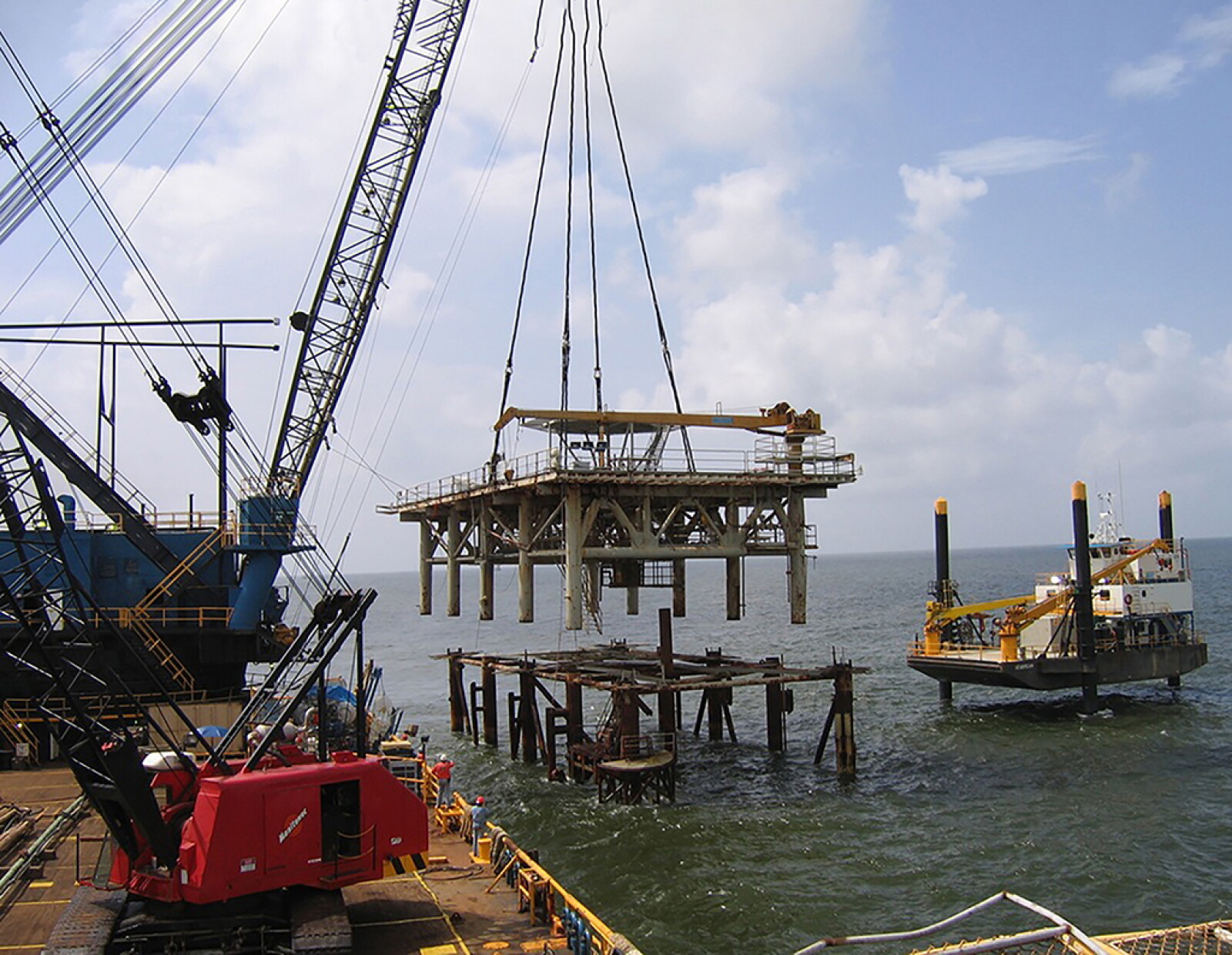
Decommissioning Offshore Platforms: What Nigerian Law Requires and What It Means for Vessel Operators

Decommissioning is no longer a distant problem for Nigerian offshore assets. Under the Petroleum Industry Act and the NUPRC’s 2026 Regulations, operators must plan early, fund the work in escrow, and obtain approval before any equipment is removed. For vessel operators, this means new demand, and new compliance questions around cabotage, IMO standards and contract terms. Download and read our latest brief for more information. For enquiries, contact info@lexvertex-legal.com

Corporate & commercialEnergy & natural resourcesMaritime & shippingRegulatory

Open brief
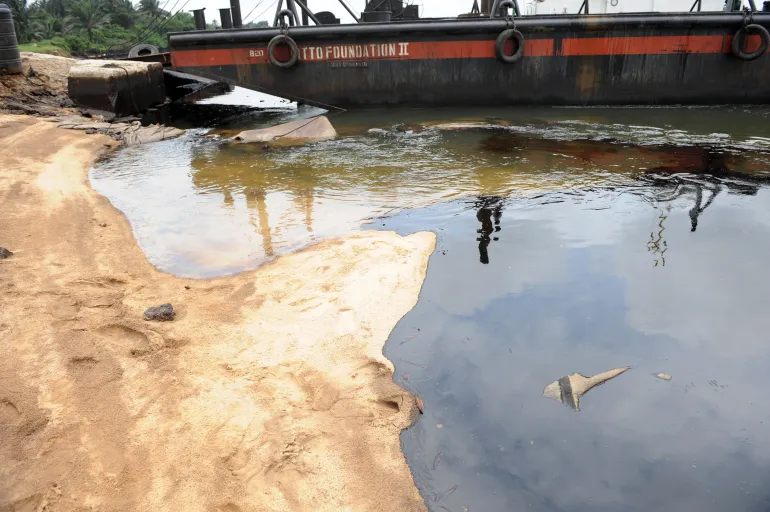
Oil Spill picture from Aljazeera website

Brief

What Do You Do If Your Vessel Causes An Oil Spill?

When your vessel causes an oil spill, the first few hours matter most. Stop the discharge, activate your SOPEP, and contain the oil, but do not use dispersants without regulatory approval, because using unapproved dispersants is illegal under the NOSDRA Act. The reporting clock starts immediately: NIMASA within 2 hours, a POLREP within 12 hours, and NOSDRA in writing within 24 hours. Inform your P&I club too. Failing to report or clean up attracts daily penalties, and prompt reporting does not bar prosecution or civil claims. Keep detailed records, because they will support you in any investigation or claim. Read through the Brief for guidance in the event you experience an Oil Spill.

Energy & natural resourcesMaritime & shippingRegulatory

Open brief
Maritime Briefs Weekly Update

Brief

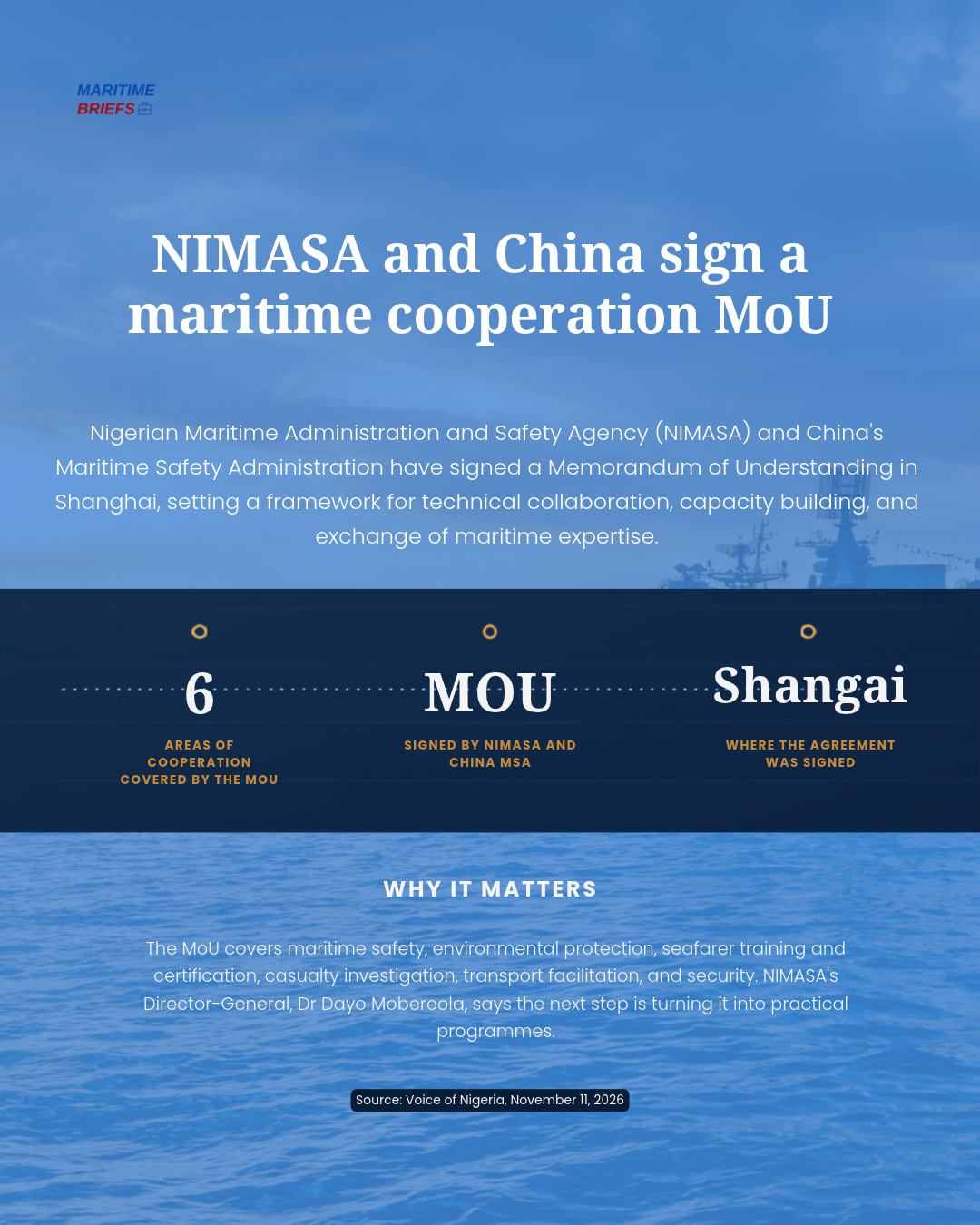
MB Weekly Update - NIMASA and China sign a maritime cooperation MoU

Nigeria and China have taken a formal step on maritime cooperation. Nigerian Maritime Administration and Safety Agency (NIMASA) and China’s Maritime Safety Administration signed a Memorandum of Understanding in Shanghai, setting a framework for technical collaboration, capacity building and exchange of maritime expertise. It covers six areas: maritime safety and navigation, marine environmental protection, seafarer training and certification, investigation of marine casualties, facilitation of maritime transport, and maritime security. NIMASA’s Director-General, Dr Dayo Mobereola, called the agreement a historic milestone and said the focus now is on turning it into practical programmes and tangible benefits. For more enquiries, contact us.

Maritime & shipping

Open brief